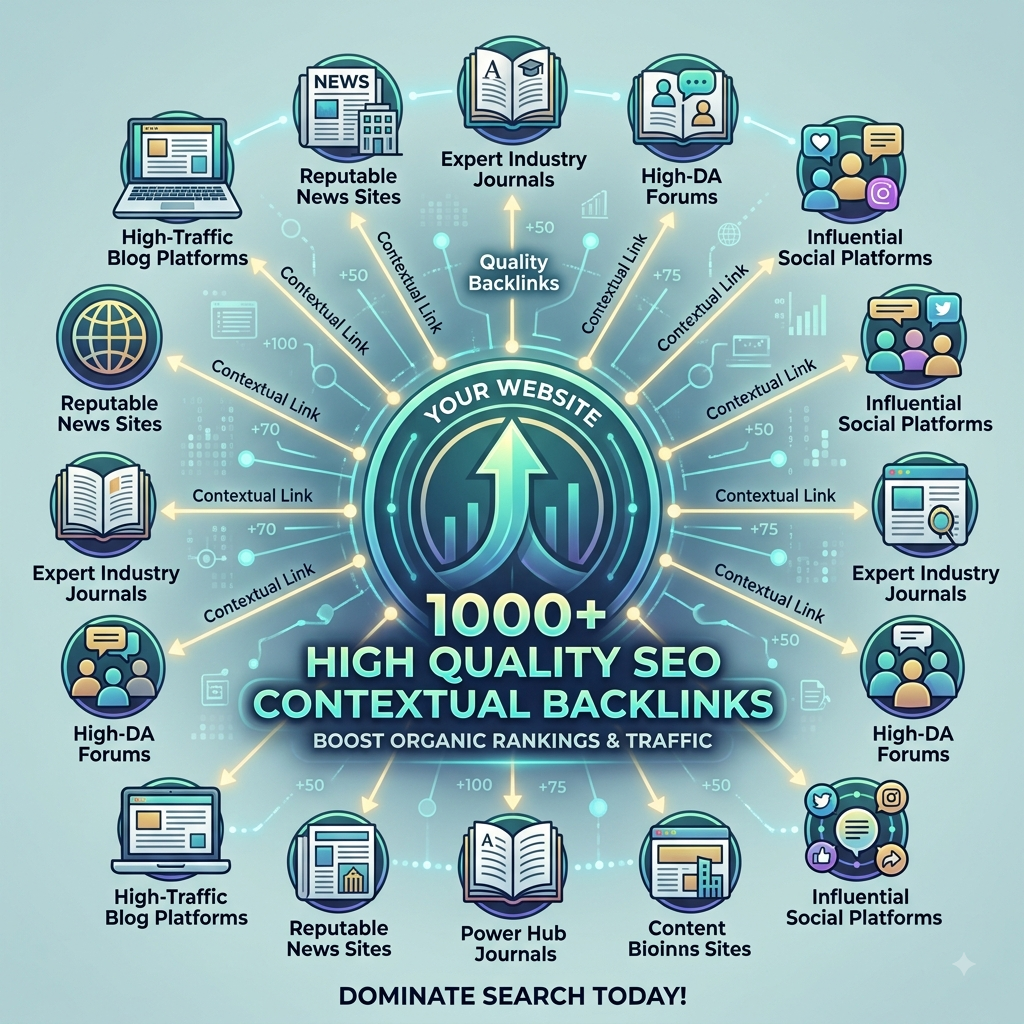
"Contextual" is one of those SEO words that gets used loosely, so it's worth being precise: a contextual backlink sits inside a real sentence, on a real page, surrounded by content that's actually about something — not dropped into a sidebar widget, a signature block, or a bare list of links. That distinction is a large part of why contextual links carry more weight than other link types at a similar authority level.
Why context is a ranking signal in its own right
Google's algorithms read the text around a link, not just the anchor text itself, to judge topical relevance. A link about project management software sitting inside a paragraph about project management software is a stronger relevance signal than the identical anchor text sitting in an unrelated sidebar. A contextual backlink package is built around exactly that principle at scale.
The anchor text mistake that undoes contextual links
Even genuinely contextual links can look manipulative if every single one uses the exact same exact-match anchor text. A natural profile mixes exact-match, partial-match, branded, and generic anchors — "click here," "this guide," your brand name — in proportions that mirror how real sites actually get linked to, rather than how a marketer wants them to be linked to.
Where volume contextual links fit
This tier works best as a foundation layer for a new or growing site, giving you breadth before you invest in fewer, more expensive placements like a DA 70+ package. Most successful campaigns combine both rather than relying on either alone.
A common mistake: using this as the only tactic on a competitive page
Volume contextual links are a foundation, not a finishing move. Buyers targeting a genuinely competitive commercial keyword and relying solely on this tier often plateau below page one, because the profile lacks the handful of exceptional, high-authority placements that tip a close competitive race.
How delivery and results typically unfold
Expect placements to roll out over several days as each link type in the mix gets built out individually. Discovery and crawl signal typically show up within the first two weeks; broader ranking movement depends on your overall page strength and what else is running alongside this campaign.
Frequently asked: how much anchor text customization is included?
Standard delivery rotates your target keyword, close variations, your brand name, and generic phrases automatically in proportions designed to look organic. If you have a specific anchor text strategy already in mind — perhaps informed by an existing profile audit — most providers, including this listing, will accommodate custom anchor text ratios on request rather than only offering the default automatic distribution.
The bottom line: contextual link building at volume is one of the most reliable foundation-layer investments in SEO, precisely because it mirrors how organic link profiles actually grow — messily, from many sources, with varied anchor text. Use it as the base of a campaign and reserve higher-cost, higher-authority packages for the specific pages that need an extra push.