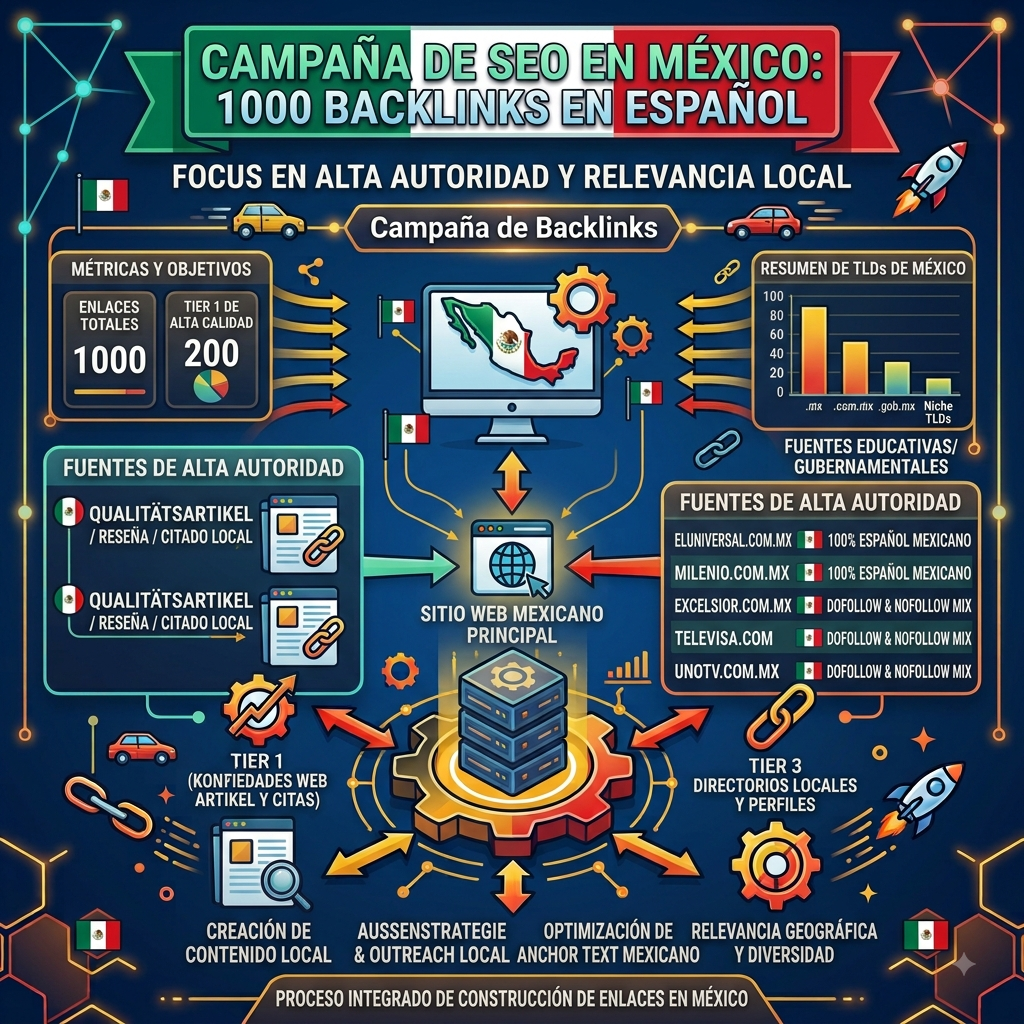
Businesses expanding into Mexico often make the same mistake: they translate their website into Spanish and assume the backlink strategy that worked in English will transfer automatically. It won't, because Google's relevance signals for a Spanish-language, Mexico-intent query weigh the language and regional footprint of the linking sites themselves, not just the content on your own page.
Why machine-translated links don't cut it
A backlink from a site that's clearly been machine-translated reads as inauthentic to both Mexican users and to Google's own language-detection systems. A genuine Spanish-language Mexican backlink campaign sources from native Spanish-speaking blogs and directories, which is a meaningfully different signal than an internationally-mixed package with translated anchor text bolted on.
Language relevance as a ranking factor
Google's systems increasingly treat language and regional relevance as first-class signals rather than an afterthought layered on top of authority. A DA 40 link from a genuinely Mexican Spanish-language site can outperform a DA 60 link from an unrelated English-language site for a Mexico-intent query, simply because the relevance match is stronger.
Layering Web 2.0 links underneath
A wide contextual campaign like this pairs naturally with a dedicated Spanish-language Web 2.0 layer for buyers who want both breadth of coverage and a set of fully-controlled, durable placements underneath it.
A common mistake: assuming Spanish is one undifferentiated market
Mexican Spanish, Spain's Castilian Spanish, and other regional variants differ in vocabulary, tone, and search behavior. A campaign genuinely built for the Mexican market — not a generic "Spanish-language" package — matters if Mexico specifically, rather than the wider Spanish-speaking world, is your actual target.
What to expect and how to measure it
Track visibility specifically in google.com.mx alongside your global rankings, since geographic and language relevance often show up there first. Expect the campaign to build out over several days to a week, with the clearest early signal being increased organic traffic from Mexican IP addresses and Spanish-language search queries.
Frequently asked: do I need a Spanish-language version of my site first?
Ideally yes — Spanish-language backlinks pointing at an English-only page create a relevance mismatch that limits how effectively the links can help, since Google evaluates the destination page's language and content alongside the links pointing at it. If a full Spanish-language site isn't ready yet, at minimum have a Spanish-language landing page for the campaign to target, even if the rest of your site remains in English for now.
The bottom line: language and regional relevance are not optional extras for international SEO — they're core ranking factors that a generic, translated backlink strategy consistently underdelivers on. For any business genuinely targeting Mexico, native Spanish-language link building isn't a nice-to-have layer, it's the foundation the rest of the campaign should be built on.