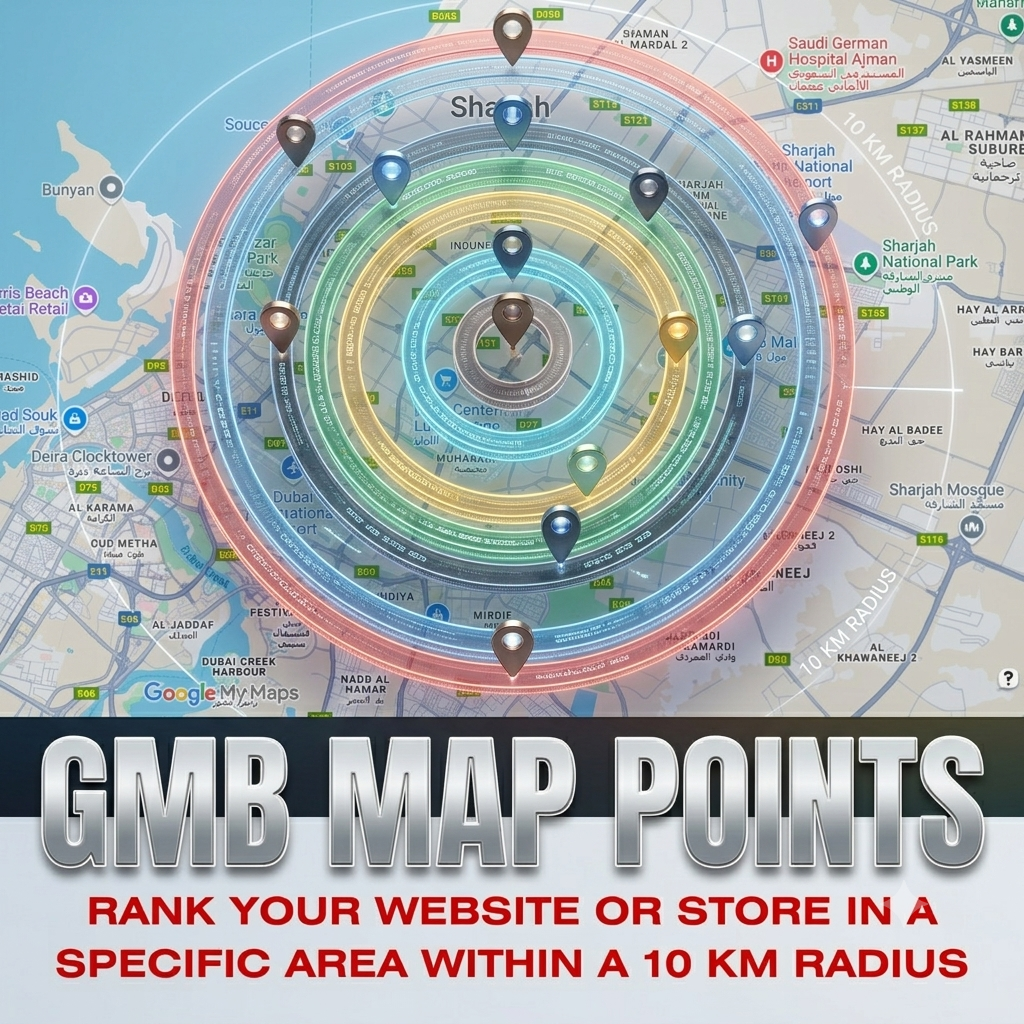
Most local SEO advice stops at "optimize your Google Business Profile and get reviews." That's necessary but incomplete — it ignores one of the more effective, lesser-known levers for local pack visibility: geographically distributed map point citations that reinforce location relevance to Google's local ranking algorithm.
How local ranking actually differs from organic ranking
Google's local algorithm weighs proximity and location-consistency signals far more heavily than standard organic search does. A map point campaign builds exactly that kind of location-consistency signal — citations distributed around your business's service area that tell Google's local systems your business genuinely operates where it claims to.
Why this pairs with, not replaces, GMB optimization
Map points reinforce a profile that's already in good shape; they don't fix a broken one. If your Google Business Profile has thin categories, no photos, or an inconsistent NAP (name, address, phone) across the web, address those first — then a map point and Web 2.0 layer amplifies a foundation that's already solid rather than propping up one that isn't.
Who benefits most from this tactic
Any business competing on "near me" or city-specific searches — home services, clinics, restaurants, law firms — sees a more direct return here than an e-commerce brand shipping nationwide would. It pairs well with a broader local promotion campaign for businesses that want both citation building and Google Business Profile optimization working together.
A mistake to avoid: ignoring GBP fundamentals first
Map points amplify a Google Business Profile that's already correctly categorized, verified, and consistent across the web — they don't fix a profile with the wrong category or an inconsistent address. Audit your GBP listing before running a citation campaign, or the amplification effect has little to actually reinforce.
What kind of movement to expect and when
Local ranking factors compound more slowly than organic ones — expect four to eight weeks before map pack position shifts become clearly measurable, tracked using local rank-tracking tools rather than a single manual search, since Google personalizes map results based on the searcher's own location.
Frequently asked: does this work for multi-location businesses?
Yes, and it's actually one of the stronger use cases — each location needs its own map point and citation campaign built around its specific address and service radius, since local ranking factors are evaluated per-listing rather than at the brand level. A multi-location franchise typically runs a separate, tailored version of this campaign for each individual Google Business Profile rather than one combined campaign covering every location at once.
The bottom line: local ranking runs on its own set of rules, and a business that only ever invests in standard backlinks is leaving the local pack — often the highest-converting real estate on the results page — largely unaddressed. Map points and citation building close that specific gap, and they're worth the investment for any business that depends on local, in-person customers.