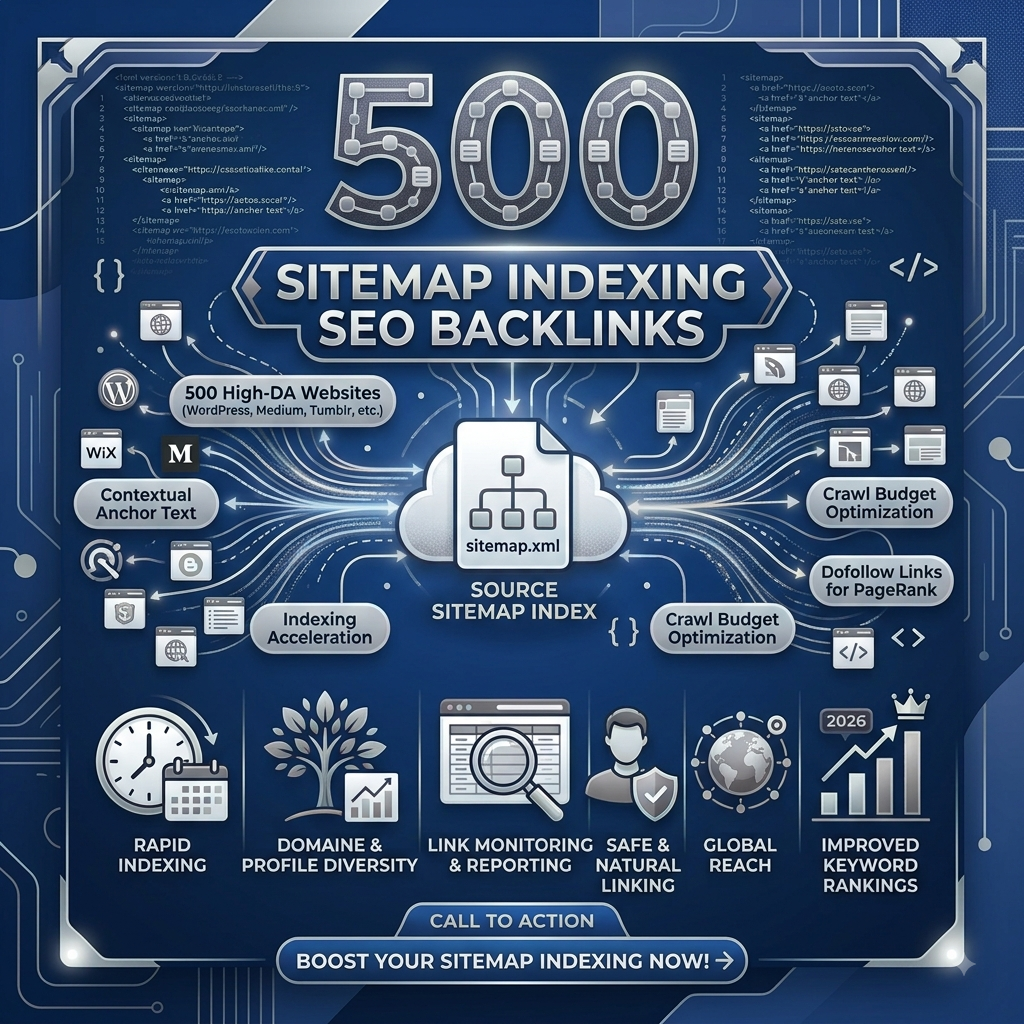
Open Google Search Console on almost any large or newly launched site and you'll usually find the same frustrating gap: a submitted sitemap with far more URLs than Google has actually indexed. Until a page is indexed, nothing else about your SEO work — content, on-page optimization, backlinks — can affect its ranking, because it simply doesn't exist in the results Google is choosing from.
Why crawl budget runs out before indexing finishes
Google allocates a finite crawl budget to every site, and large catalogs, thin content, or a history of low-quality pages can all cause Google to deprioritize crawling new URLs. A dedicated indexing campaign works around this by creating additional crawl paths and sitemap signals that push Google's crawlers toward your unindexed URLs faster than passive waiting would.
When this problem shows up most
Large e-commerce catalogs with thousands of product pages, sites recovering from a migration or URL structure change, and any site that has recently published a large batch of new content are the most common cases where indexing — not ranking — is the actual bottleneck.
Indexing first, then ranking links
The right sequencing matters: run an indexing push before or alongside a ranking-focused campaign like contextual backlinks, since links pointing at an unindexed page can't pass their full value until Google actually has that page in its index.
A mistake to avoid: treating this as a ranking campaign
Indexing services solve discovery, not authority — ordering this expecting a ranking boost misunderstands what it does. The value shows up as pages appearing in Google's index faster, which is a prerequisite for ranking, not a ranking signal on its own.
How to verify it's working
Check Google Search Console's "Pages" report before and after the campaign — a successful indexing push shows a measurable drop in "Discovered, not indexed" or "Crawled, not indexed" URLs within one to two weeks. This is one of the more directly verifiable services in this category, since Search Console reports the exact indexing status of every submitted URL.
Frequently asked: why isn't Google indexing my pages automatically?
Common causes include a limited crawl budget being spread across a large site, thin or duplicate content signaling low priority to Google's crawlers, technical issues like blocked resources or slow load times, or simply a new domain that hasn't yet established a consistent crawl pattern. This service works around all of these by creating additional, direct signals that push your specific URLs toward the front of the crawl queue rather than waiting for organic discovery.
The bottom line: indexing is a prerequisite for ranking, not a ranking factor itself, and treating the two as separate problems — with separate solutions — produces a more efficient campaign than assuming more backlinks will eventually fix an indexing gap on their own. Fix discovery first, then invest in authority.