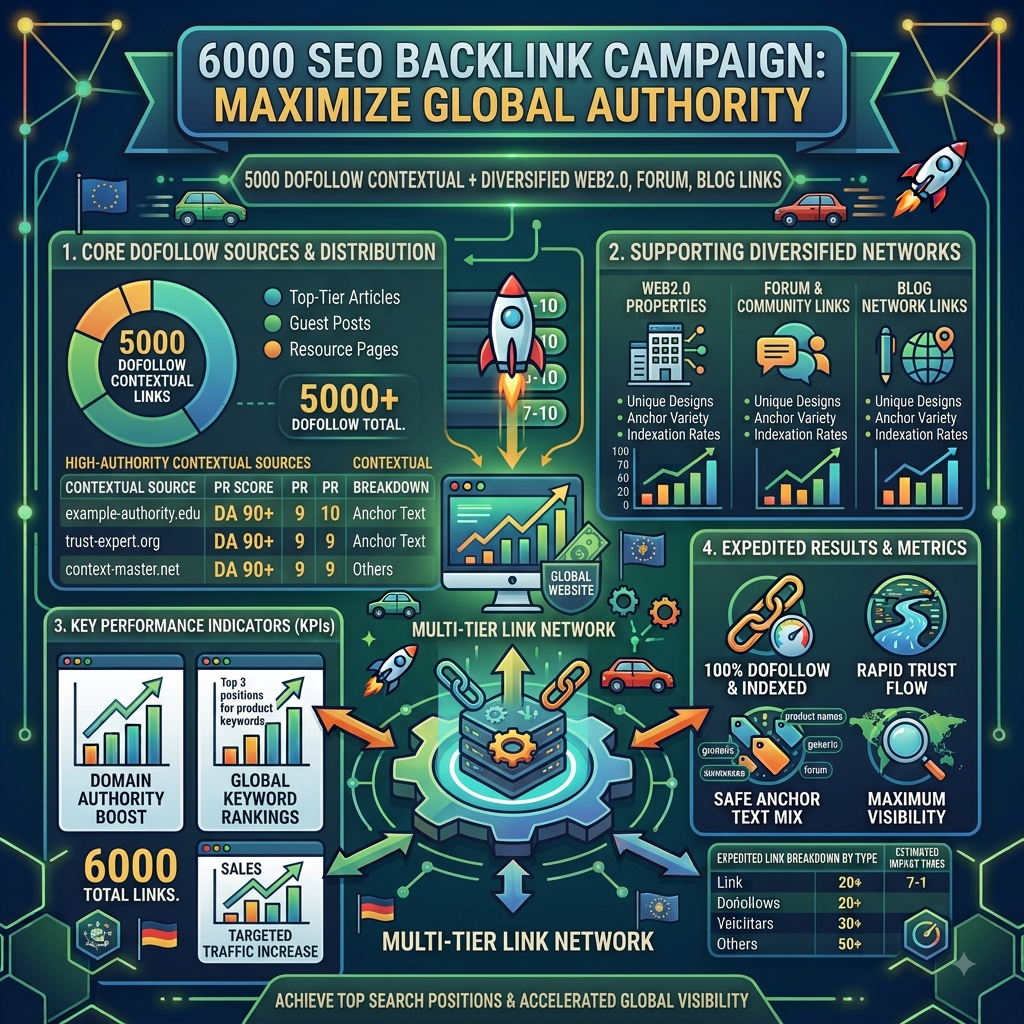
Ask ten SEOs whether contextual links or Web 2.0 links are "better" and you'll get ten different answers, mostly because it's the wrong question. They solve different problems, and a profile built entirely from one type tends to fail in a predictable way that a blended profile avoids.
What each format is actually good at
Contextual links carry stronger topical relevance since they sit inside genuinely on-topic content on third-party sites. Web 2.0 links offer durability and control, since you build and own the property yourself. A blended package combining both gives you relevance from one format and reliability from the other, in a single coordinated order.
Why an all-one-type profile looks unnatural
A backlink profile that's 100% contextual, or 100% Web 2.0, or 100% any single format doesn't resemble how real sites actually accumulate links over time — organic link growth is inherently messy and comes from a wide mix of source types, formats, and contexts. Diversity of link type is itself a natural-growth signal, independent of the individual link quality.
Building the mix yourself vs buying it pre-blended
You can assemble this mix manually by combining separate contextual and Web 2.0 orders, but a pre-blended package handles the anchor text balance and delivery pacing across both formats for you — worth the convenience for buyers who don't want to manage the coordination themselves.
A mistake to avoid: assuming more format variety always helps
Diversity matters, but it isn't unlimited — a profile needs enough links of each type to look substantive, not just a token scattering across every possible format. This package balances contextual and Web 2.0/forum/blog links in a ratio designed to look organic, rather than spreading too thin across too many categories.
What to expect as this rolls out
Given the combined scale, expect a staged delivery over roughly a week, with contextual placements and the supporting volume layer completing on slightly different timelines. Track both referring domain count and overall link count as separate metrics, since this package is specifically designed to move both together.
Frequently asked: can I request a different split between the two link types?
The standard 5,000-contextual-plus-supporting-volume split is designed to mirror natural profile diversity for most sites, but if you have a specific reason to weight more heavily toward one format — for instance, an established site that already has strong contextual coverage and mainly needs breadth — most providers, including this listing, can adjust the ratio on request rather than only offering the fixed default split.
The bottom line: the debate over which single link type performs best misses the point — real, organically-earned profiles are diverse by nature, and a package deliberately blending contextual authority with supporting volume gets closer to that natural pattern than either format alone, in a single coordinated order.