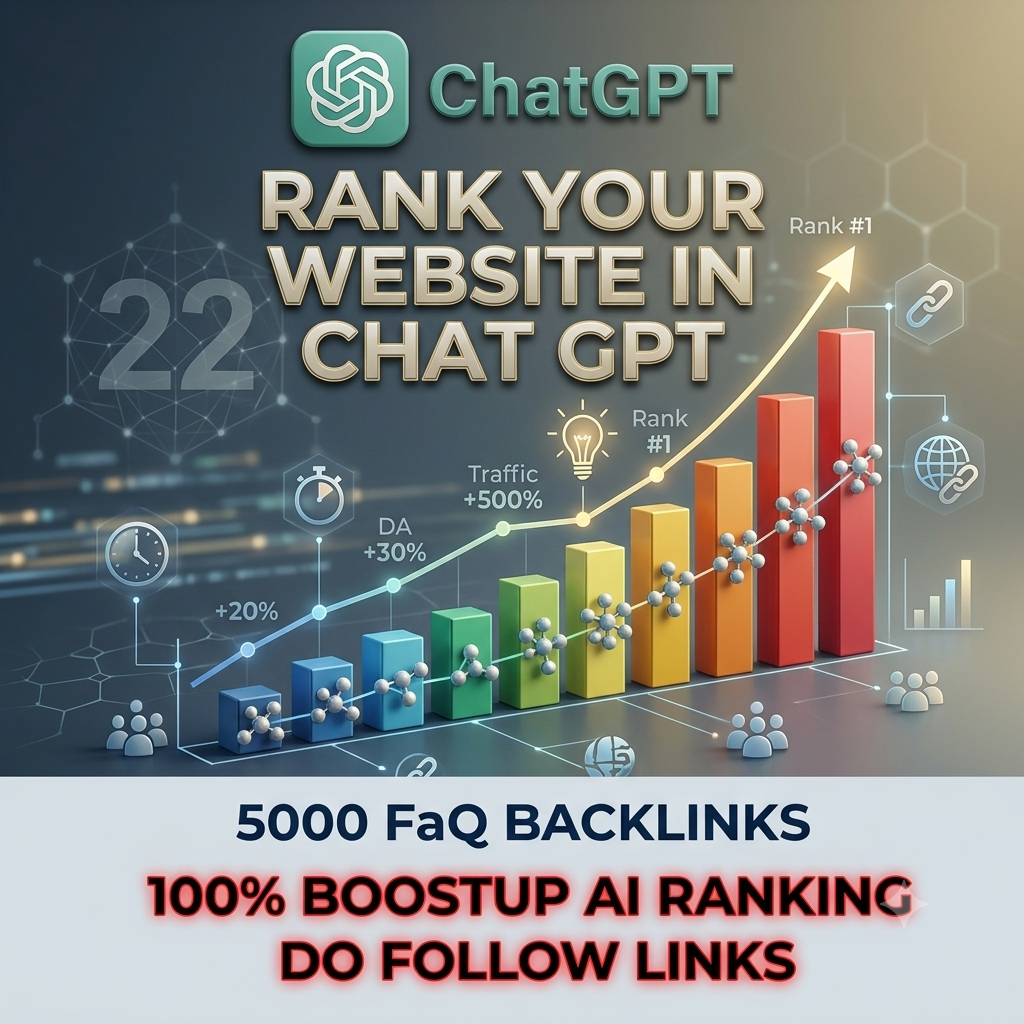
For twenty years, ranking well meant showing up in Google's ten blue links. That's no longer the whole picture — a growing share of searches now get answered directly by ChatGPT, Perplexity, and Google's own AI Overviews, and getting cited by those systems requires content and links structured differently than traditional SEO ever demanded.
Why FAQ structure matters to language models
Large language models favor clearly structured question-and-answer content when selecting sources to cite in a generated answer — it's simply easier for the model to extract and attribute a direct answer to a direct question than to parse a long, unstructured article. A FAQ-formatted backlink campaign is built specifically around this structural preference.
GEO and AEO aren't replacing traditional SEO
Generative Engine Optimization and Answer Engine Optimization sit alongside traditional SEO rather than replacing it — FAQ schema and question-based content already perform well in Google's own featured snippets and "People Also Ask" boxes, so structuring content this way pulls double duty across both traditional and AI-driven search.
Why early positioning compounds
AI answer engines tend to keep citing sources they've already trusted once a citation relationship is established, which makes this a genuinely forward-looking investment rather than a reactive one. Pairing it with a standard contextual backlink campaign covers both the traditional and AI-driven halves of modern search.
A mistake to avoid: writing questions nobody actually asks an AI
The FAQ questions need to reflect genuine queries people put to ChatGPT or Perplexity, not just repurposed traditional SEO keywords. Think about how someone would phrase a question conversationally to an AI assistant, which often differs meaningfully from how they'd type a Google search.
What results look like and how to track them
AI citation tracking is newer and less standardized than traditional rank tracking, so expect to manually check whether your brand or URL gets referenced when you ask ChatGPT or Perplexity your target questions directly. Alongside that, expect the traditional SEO benefit — FAQ schema and structured content — to show up in Google's featured snippets within the usual four-to-six-week window.
Frequently asked: which AI platforms does this actually help with?
The FAQ-structured approach is designed to be broadly compatible with how most current large language models select and cite sources, including ChatGPT, Perplexity, and Google's AI Overviews, since all of them favor clear question-and-answer formatting when extracting citable information. As these platforms evolve their own citation algorithms, structured, well-organized content consistently remains favored over unstructured alternatives, which is why this format is a reasonably durable investment rather than one likely to become obsolete quickly.
The bottom line: AI-driven search is no longer a future consideration — it's actively reshaping how people find information right now, and content structured to be cited by these systems is a genuinely forward-looking investment. Getting positioned early, before AI citation patterns fully solidify, tends to compound in your favor over time.