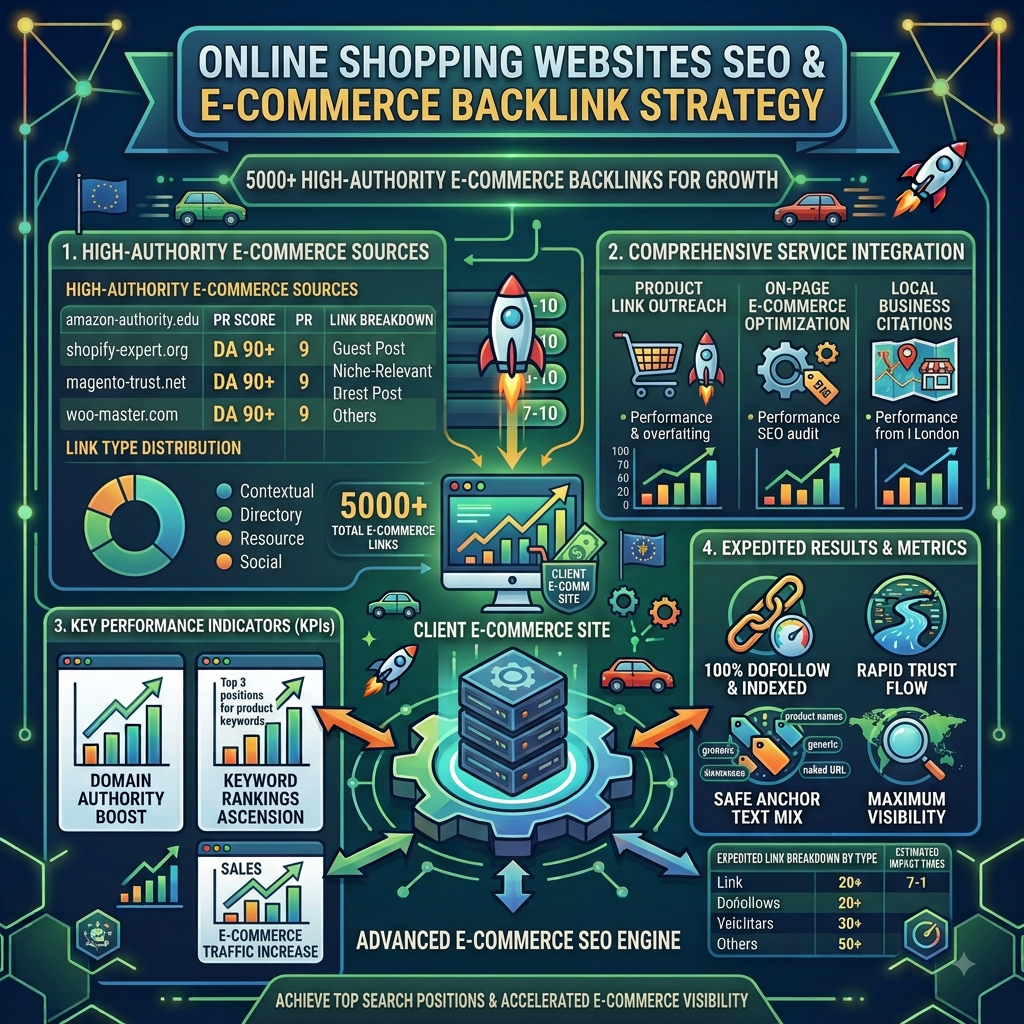
A common e-commerce SEO mistake is treating link building as a homepage-only exercise. It's an understandable default — the homepage is the most visible page — but it also means hundreds or thousands of category and product pages compete for organic visibility with zero dedicated authority signal of their own.
Why homepage-only link building caps your visibility
A homepage with strong backlinks can rank well for branded and broad category searches, but it does very little for the long-tail product and category searches that typically drive the bulk of e-commerce organic traffic and revenue. A distributed e-commerce backlink campaign spreads authority across homepage, category, and top product pages specifically to address this gap.
How this distribution should actually work
Rather than dumping every link on a single URL, priority should follow revenue: your highest-converting categories and best-selling products deserve their own authority signal, proportional to how much organic traffic they realistically could capture with the right backing.
Why this needs to be a recurring campaign
Product catalogs change constantly — new launches, seasonal categories, retired SKUs — which means e-commerce link building works better as a recurring quarterly process than a single one-time purchase, especially when layered with broader contextual coverage for the store's overall domain authority.
A mistake to avoid: not sharing clear page priorities
Without a clear list of priority URLs, this campaign defaults to a generic distribution that may not match your actual revenue priorities. Share your top-converting categories and best-selling products upfront so link distribution follows where the commercial value actually is.
What kind of timeline to expect
Given the scale, expect delivery staged over a week to ten days across homepage, category, and product pages. Track organic traffic and rankings at the category and product level specifically, not just the homepage, since that's where this campaign is designed to show its effect.
Frequently asked: should new product pages get links immediately at launch?
Waiting a short period — typically a week or two after a new product page is published and confirmed indexed — before directing backlinks at it tends to work better than linking to it on day one, since Google needs time to crawl and understand the page's own content first. For genuinely time-sensitive launches, pairing this with an indexing-acceleration service ensures the page is discoverable before the backlink campaign begins reinforcing it.
The bottom line: e-commerce SEO succeeds or fails at the category and product page level as much as the homepage, and a distributed backlink strategy that reflects actual revenue priorities consistently outperforms a homepage-only approach for the long-tail searches that drive most store traffic.