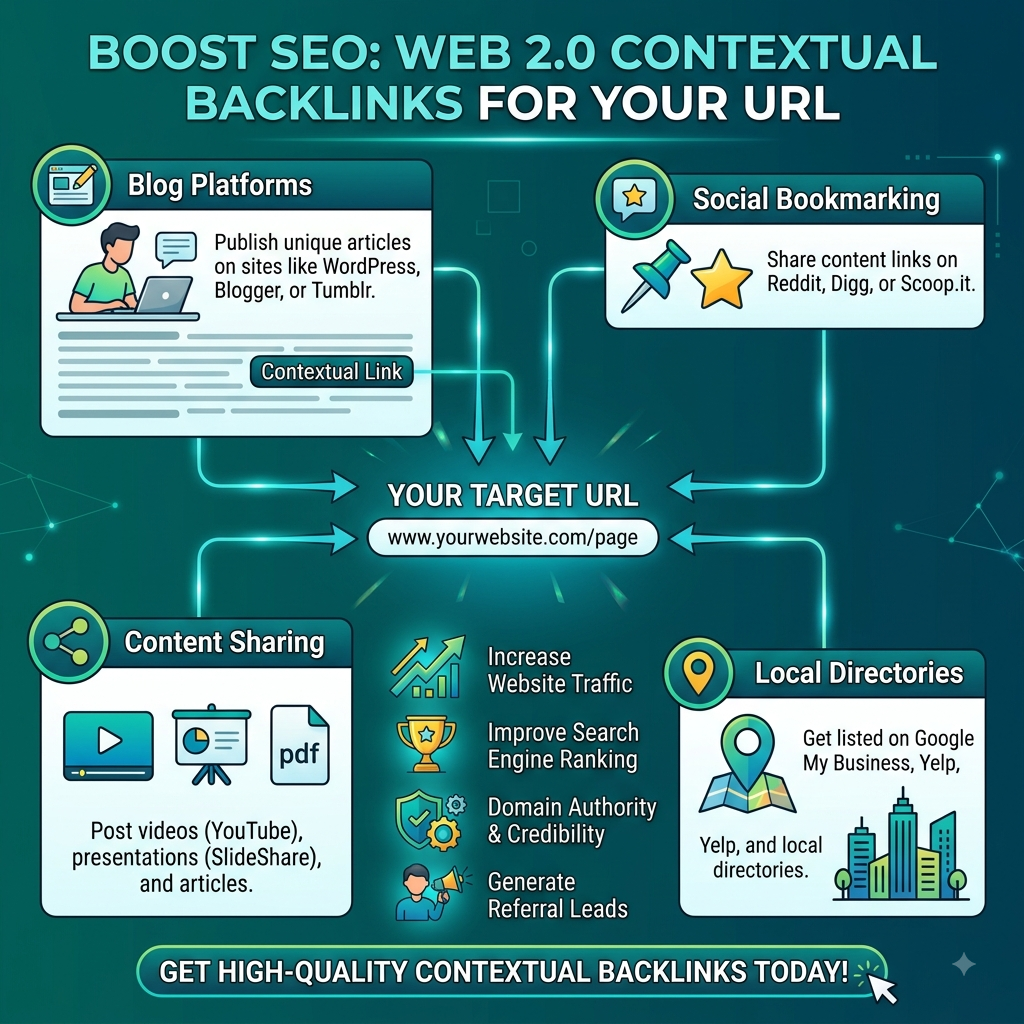
Most affordable backlink formats trade cost for durability — cheap links tend to disappear faster. Web 2.0 backlinks are the exception, because the low cost comes from the platform (free publishing tools like Blogger or WordPress.com) rather than from cutting corners on the placement's actual staying power.
Why owning the property changes everything
A Web 2.0 property is built and controlled by whoever creates it, which means there's no third-party site owner who might edit, delete, or repurpose the page later. A Web 2.0 backlink package leans entirely on this control: unique content written around your target keyword, on a page that exists specifically to host your link and has no reason to be taken down.
Why it works for literally any URL type
Because the format doesn't depend on finding a topically matching third-party site, it works identically well for a homepage, a blog post, a product page, a YouTube video, or a social profile — genuine flexibility most other link types can't match.
Where this fits in a larger campaign
Use Web 2.0 links as a flexible, low-cost supporting layer underneath higher-authority placements like DA 70+ manual links, or as a standalone starting point for a brand-new campaign with a limited initial budget.
A mistake to avoid: expecting deep authority from a low-cost format
Web 2.0 links at this price point offer genuine durability, not necessarily high domain authority — don't expect this format alone to move a highly competitive keyword. It's a foundation and supporting layer, not a substitute for premium, high-DA placements on your most important pages.
What to expect from delivery
Expect properties to go live within a few days given the format's relative simplicity to build. Because each is self-controlled, expect these links to remain stable over time — track them periodically, but expect far less link churn than with third-party placements.
Frequently asked: how long do Web 2.0 links typically stay live?
Because these properties are built and controlled specifically to host your placement, with no third-party owner who might remove them, they tend to remain live indefinitely barring a platform-wide policy change — a meaningfully different durability profile than links placed on someone else's existing site, which depend entirely on that site owner's ongoing goodwill and site maintenance.
The bottom line: durability and flexibility at a low cost make Web 2.0 links one of the more efficient building blocks in any campaign, whether as a standalone starting point on a limited budget or a supporting layer beneath higher-authority placements elsewhere.